Every GTA real estate agent eventually hits the same wall: you need a website with live MLS listings on it, and the market is full of vendors who all claim to be the best option. Some are website-only. Some bundle in a CRM. Pricing ranges from free-with-upsells to $250 setup fees plus a monthly rate. This guide walks through what an IDX website provider actually does, what to check before you sign up, and how the main categories of providers compare — written from the position of someone who builds one of them, so take the Orchestate sections with that in mind, but the evaluation criteria apply no matter who you choose.
In This Article
What an IDX Website Actually Is
IDX stands for Internet Data Exchange — the standard that lets a brokerage's website display active MLS listings pulled from the board's data feed, rather than listings you'd have to manually re-enter. In the GTA, that feed comes from TRREB (the Toronto Regional Real Estate Board) via PropTx, the data platform TRREB uses to distribute listing data to approved vendors.
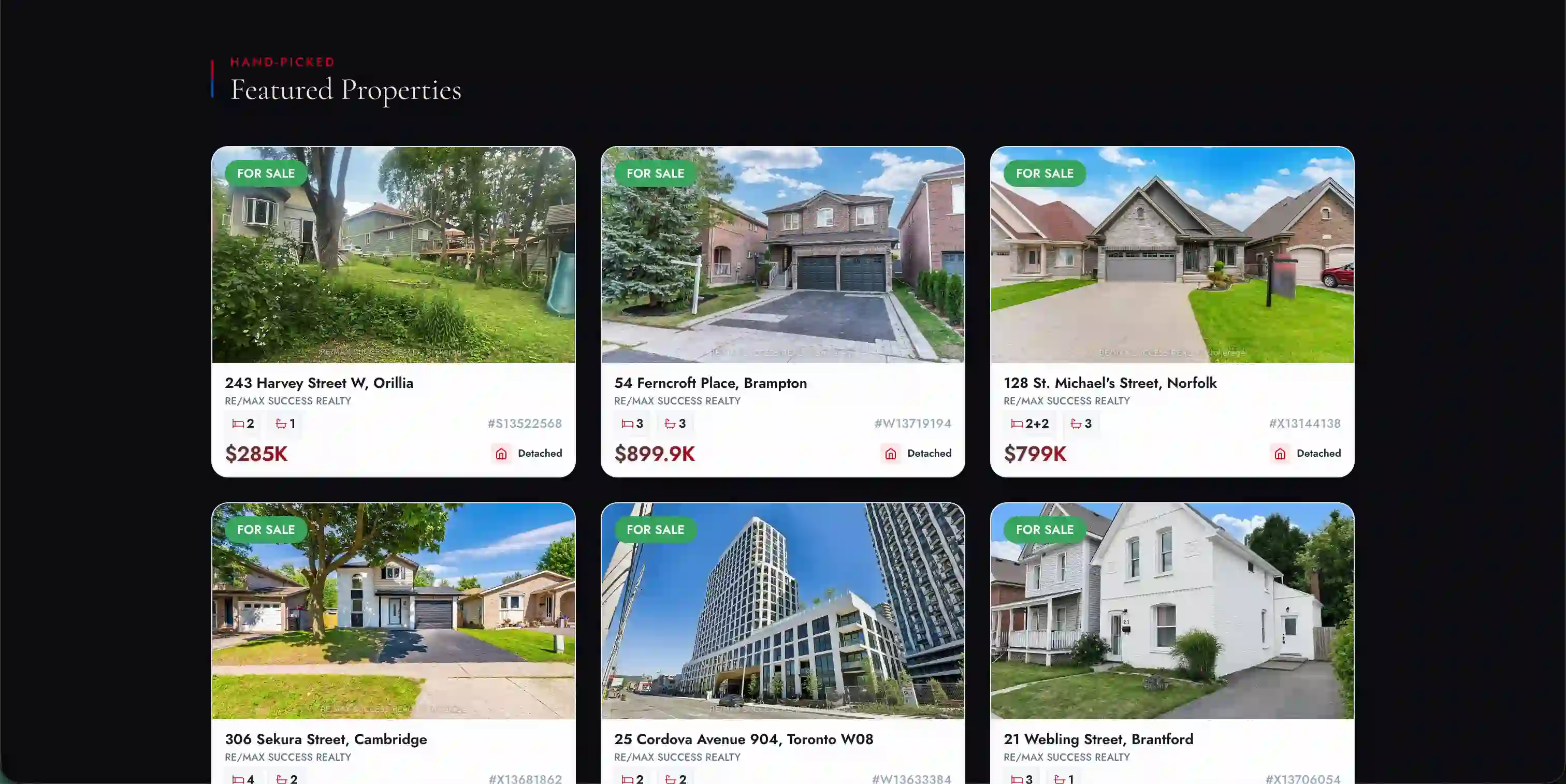
An "IDX website provider" is a company that's been approved to pull that feed and builds the actual website around it — search pages, individual listing pages, map search, and (depending on the vendor) lead capture forms tied to it. Every provider in this space is working from the same underlying TRREB/PropTx data; what differs is how fresh that sync is, what the site looks like, and what else is bundled in alongside it.
There's also a reason to have one beyond convenience: it's one of the few places your own name and brand, rather than a brokerage or a listing portal, sits directly in front of a live property search. A realtor.ca listing or a generic brokerage page doesn't build any search equity for you individually — every listing page on your own IDX site is a page Google can index under your name and domain, and it keeps compounding as long as you keep listing.
What to Check Before You Sign Up
Before comparing specific vendors, these are the things that actually matter once you're using the site day to day — not the things that get sold hardest on the landing page.
1. How fresh is the data sync?
Some providers sync once a day. If a listing goes pending or sells in the morning, your site can show it as active until the next overnight sync — which looks bad to a buyer who clicks through and calls about a property that's already gone. Ask specifically how often the feed updates, not just whether it's "live."
2. Is the custom domain included, or an upsell?
A website on a vendor's subdomain (like yourname.vendorsite.com) reads as a template site to anyone who notices the URL. Check whether a real custom domain and SSL are included in the base price or billed as an add-on — and whether moving a domain you already own is free or treated as a separate "transfer fee" line item.
3. Where do leads actually go?
A contact form that just emails you isn't a CRM — it's a form. Ask whether captured leads land in an actual CRM with a history you can search later, and whether there's a cap on how many leads your account can hold before you need to upgrade plans.
4. What's the contract term and setup cost?
This is the one agents skip and regret. Some providers bill month-to-month with no setup fee. Others bill their standard plan annually (meaning a year's commitment up front) and charge a one-time setup fee on top — often $200–300. Neither is inherently wrong, but you should know which one you're signing before you sign it, not after the first renewal.
5. Does the website connect to anything else you do?
If your website, your email marketing, and your social media content are three completely separate tools, you're re-entering the same listing information three times for every property. Worth asking whether the vendor's ecosystem connects those, or whether the IDX website is the only thing they do.
The Three Types of IDX Providers in the GTA Market
Most of what's available to Toronto-area agents falls into one of three categories:
Website-only IDX builders. These vendors do one thing — a branded site with MLS search — and do it as a standalone product. No CRM, no email, no social content. You're expected to run everything else separately. Good fit if you already have a CRM and marketing stack you're happy with and just need the website piece.
Website-plus-bolted-on-extras. A number of long-established Canadian providers (iNCOM is the most common one GTA agents run into) bundle in a basic CRM, templated drip email, and a manual blog alongside the website. The extras exist, but they're generally manual tools you operate yourself rather than anything automated — independent reviews consistently describe the bundled CRM in this category as something agents outgrow quickly.
AI-native bundles. The newer category — IDX website, CRM, and content generation built as one connected system rather than a website with tools bolted on afterward. Orchestate is built this way: a listing syncing into the website is the same data that becomes a CRM lead record and a scheduled social post, without re-entering anything.
Quick Comparison
See the full breakdown with sources: Orchestate vs iNCOM.
Where Orchestate Fits
Orchestate is built around one idea: a TRREB/PropTx listing should only need to be synced once, and everything downstream of it — the website page, the CRM record, the social post — should build itself from that same data. In practice, that means:
- Live MLS listings synced from TRREB/PropTx automatically, with five templates (Launch, Elevate, Prestige, Onyx, Forge) to choose from
- A free custom domain with automatic SSL, or a free transfer if you already own one — plus built-in domain search and purchase through Cloudflare if you need a new one
- A built-in CRM with no lead cap — every inquiry from the website lands there automatically
- AI-generated social content built from the same listing data, so the website and your social presence never drift out of sync
All of it is one $39/month subscription, billed month-to-month with no setup fee — not because bundling is inherently better for every agent, but because for agents tired of running a website, a CRM, and a content tool as three separate subscriptions with three separate logins, it's the tradeoff that saves the most time.
Worth knowing: if a basic CRM and manual blog/social tools are enough for how you work, a website-plus-extras provider may genuinely be the cheaper, simpler option. The comparison above is about what's actually included, not a claim that every agent needs the AI-native version.
FAQ
Do I need board permission to get an IDX website in Toronto?
Yes. Access to the TRREB/PropTx feed requires you to be a TRREB member in good standing and to agree to the board's data display rules, which your IDX provider will typically walk you through as part of onboarding.
What's the difference between IDX and a brokerage-branded template site?
A brokerage template site may not include live MLS search at all, or may link out to the board's public search. An IDX website embeds the actual listing search and individual listing pages directly on your own branded site and domain.
Is a cheaper, website-only IDX provider ever the right call?
If you already have a CRM and content workflow you're happy with, yes — paying extra for bundled tools you won't use isn't a good trade. The bundled approach makes the most sense when you're currently running a website, CRM, and content tool as three separate subscriptions.
How much does an IDX website provider cost in the GTA?
It varies widely — from roughly $40/month flat with no setup fee, up to $45–55/month plus a one-time setup fee around $250 for providers billing their standard plan annually. Always confirm current pricing and contract terms directly with the vendor, since published figures change.
Can I switch IDX website providers without losing my domain or SEO?
Yes, as long as you own the domain yourself rather than using a subdomain the old vendor controls. Moving a domain you own to a new provider shouldn't cost anything beyond the new vendor's own setup — if a provider quotes a "domain transfer fee" for a domain you already own, that's worth questioning before you sign.
Choosing the Right Fit
The right IDX website provider depends on what you're trying to stop doing manually. If the website is the only piece you need, a website-only provider is the leaner choice. If you're already juggling a website, a CRM, and a content tool as separate subscriptions, an AI-native bundle like Orchestate is built specifically to collapse that into one system — and you can try it free for 30 days to see which one actually saves you time.